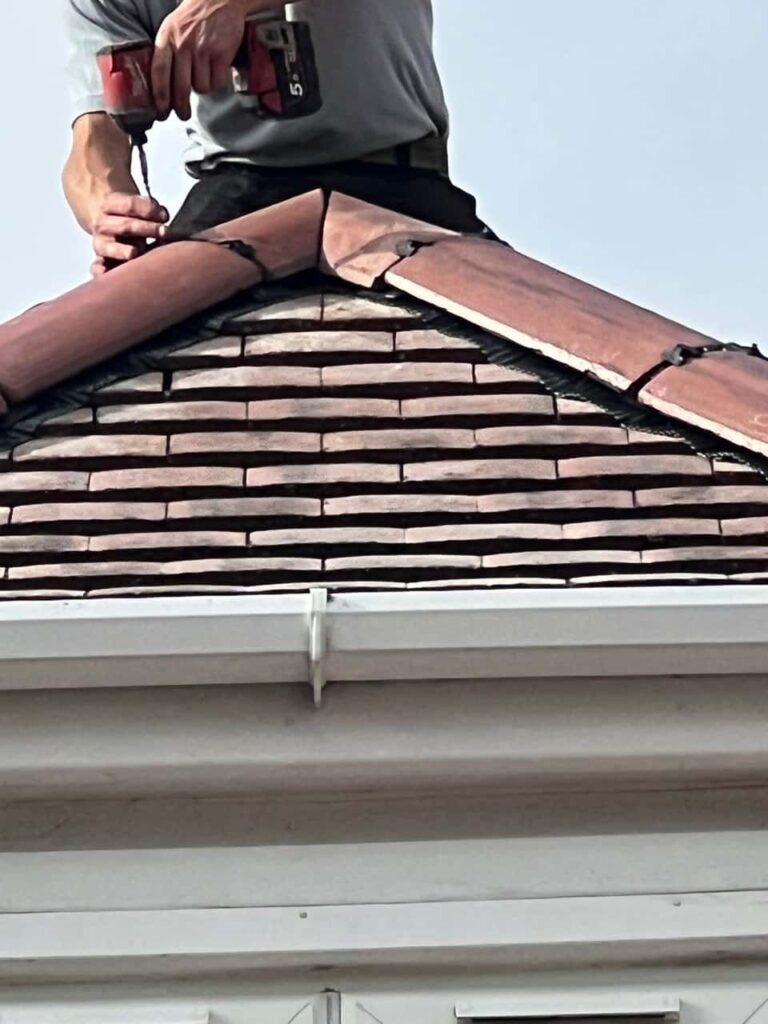
When water appears inside a property, missing roof tiles are often assumed to be the cause. However, a tiled roof contains numerous joints, fixings and weatherproofing details that can allow moisture to enter even when every tile appears to be present.
Some defects are extremely difficult to identify from ground level. A small crack, failed flashing joint or damaged section of underlay may be hidden beneath overlapping materials. Water can then travel away from its entry point before reaching the ceiling, making the true cause even less obvious.
Where Can a Tiled Roof Leak Without Any Missing Tiles?
A roof should be assessed as a complete system. Tiles form the main covering, but they work alongside the underlay, battens, flashing, valleys, ridges, verges and drainage components.
Possible sources of an apparently unexplained leak include:
- Hairline cracks in tiles
- Tiles that have moved slightly out of alignment
- Failed lead flashing
- Damaged valley linings
- Deteriorated ridge or verge details
- Defects around vents and other roof penetrations
- Torn or degraded underlay
- Blocked or overflowing gutters
- Condensation within the roof space
- Previous repairs that are no longer watertight
Finding the correct cause is essential. Treating the nearest visible feature may not resolve a leak if water is entering higher up the roof.
A Tile May Be Cracked Rather Than Missing
A roof tile can remain in position while developing a fine crack. This damage may follow impact, frost exposure, movement or gradual deterioration.
Because roof tiles overlap, the crack may be partly concealed by the tile above it. It may only admit water during prolonged rain or when wind drives moisture beneath the covering.
Small surface defects are rarely easy to confirm from below. A close inspection is needed to determine whether the tile is damaged and whether nearby tiles have also been affected.
Tiles Can Move Without Falling Off
A tile does not need to leave the roof completely to create a weakness. It may slip slightly, lift at one edge or rotate enough to reduce the intended overlap.
Minor displacement can expose part of the underlay or create a route for wind-driven rain. From ground level, the roof may still appear complete because the tile remains within the same general area.
Movement can result from failed fixings, broken tile nibs, deteriorated battens or strong winds. The repair should address why the tile moved rather than merely returning it to position.
Flashing Can Develop Small Openings
Lead flashing is commonly used where the roof covering meets chimneys, walls and other adjoining features. Its purpose is to guide water across these vulnerable junctions.
Over time, flashing may lift, split, loosen or pull away from the surface into which it is fitted. Mortar surrounding the detail can also deteriorate and create gaps.
These openings may be narrow but can admit a significant amount of water during certain weather conditions. The tiles nearby may remain perfectly intact, which can make the source easy to overlook.
Valleys Carry Large Amounts of Rainwater
A roof valley is formed where two slopes meet. It receives water from both sections and directs it towards the guttering, so even a small defect can cause noticeable leakage.
Valley linings may crack, corrode, move or become obstructed by leaves and debris. Damaged mortar at the edges can also interfere with drainage.
When water cannot flow freely, it may spread beneath adjoining tiles. A valley defect should therefore be inspected together with the surrounding roof covering and its drainage path.
Ridge and Verge Details Can Deteriorate
Ridge tiles protect the highest junction of the roof, while verge details finish the exposed edges. Even when the main field tiles are secure, defects in these areas can allow moisture to penetrate.
Cracked mortar, loose components or gaps between adjoining materials can develop gradually. Wind-driven rain may then reach beneath the covering and travel along the underlay or roof timbers.
A proper repair may involve more than filling the visible gap. Loose materials should be assessed and reinstated using a method suited to the roof’s construction.
Roof Penetrations Are Common Weak Points
Vents, pipes and other features passing through the roof interrupt the continuous covering. Each one requires a correctly formed weatherproof seal.
Seals can deteriorate, collars may split and surrounding materials can move. These defects are often small and hidden behind the penetration, making them difficult to see from a distance.
If dampness appears near one of these features, the whole junction should be inspected rather than assuming the nearest tile has failed.
Underlay Can Be Damaged Beneath Sound Tiles
The underlay provides an additional protective layer below the tiles. It can help direct small amounts of moisture towards the eaves when the primary covering is exposed to wind-driven rain.
Older underlay may become brittle, tear around fixings or deteriorate near the eaves. It can also be damaged during previous roof work.
If water passes beneath the tiles, defective underlay may no longer redirect it effectively. Accessing the affected area may require selected tiles to be lifted so that the hidden layers can be examined.
Blocked Gutters Can Mimic a Roof Leak
Gutters collect rainwater from the roof and carry it towards the downpipes. When they become blocked or incorrectly aligned, water can overflow against fascia boards, walls or the roof edge.
This moisture may enter the property and create damp patches that resemble a defect higher up the roof. The guttering, outlets and eaves should therefore form part of a complete leak investigation.
Clearing a blockage may resolve the immediate overflow, but any damage caused by prolonged water exposure should also be checked.
The Dampness May Be Caused by Condensation
Not every damp patch originates from rainwater entering through the roof covering. Warm, moisture-laden air can rise into a poorly ventilated roof space and condense on cold surfaces.
Condensation may dampen insulation, timbers and ceilings, sometimes producing symptoms similar to a leak. Its pattern may be more widespread, although localised dampness can also occur.
The timing of the problem provides useful evidence. Damp that appears only during rainfall suggests water ingress, while moisture associated with cold conditions and indoor humidity may indicate condensation. A professional assessment can distinguish between them.
Why Leak Detection Requires a Methodical Approach
Water rarely travels in a simple vertical line. It can follow battens, underlay, rafters or pipes before becoming visible inside the property. The internal damp patch may therefore be some distance from the external defect.
Effective leak detection involves examining the roof covering, vulnerable junctions, hidden layers and internal moisture pattern together. This reduces the risk of repairing an unrelated area while leaving the true entry point untreated.
For properties in Hedge End, Hampshire, early investigation can help limit how far moisture spreads into surrounding roofing materials.
Conclusion
A roof can leak even when no tiles are missing. Fine cracks, slight tile movement, defective flashing, damaged valleys, deteriorated underlay and weaknesses around roof penetrations can all admit water without creating an obvious gap.
The visible damp patch does not always identify the point of entry, so a methodical inspection is important. Hedge End Roofing Repairs provides professional roof leak detection and repair services in Hedge End, Hampshire. If you have noticed unexplained dampness or water ingress, contact the team to arrange an assessment.
Call us on: 01489 359 891
Click here to find out more about Hedge End Roofing Repairs
Click here to complete our contact form and see how we can help with your roofing needs.